


Sri Lanka is where landscapes and history come together in timeless travel experiences. The Ramayana Trail connects sacred sites, ancient towns, misty highlands, and coastal regions, offering a cultural journey through stories passed down for generations. More than a spiritual route, it is a scenic exploration of Sri Lanka’s heritage, architecture, and natural beauty.
A Journey Where Myth Meets Landscape
What makes the Ramayana Trail in Sri Lanka unique is not just the story behind it, but how naturally these locations are woven into the island’s geography. The route stretches across coastal towns, hill country valleys, and ancient kingdoms, allowing travellers to move through entirely different environments within a single journey.
Each stop is not isolated, it connects through scenic drives, changing climates, and evolving cultural landscapes, making the experience feel like a continuous story across the island rather than separate destinations.
Munneswaram Temple & Manavari Temple (Chilaw Region)
Located in the coastal town of Chilaw, these two temples are among the earliest stops on the Ramayana Trail.
Munneswaram Temple is widely known as a significant historic Hindu shrine in Sri Lanka, with centuries of cultural importance and architectural evolution. Manavari Temple, located nearby, is traditionally associated with early worship narratives linked to the Ramayana journey.
From a travel perspective, these sites offer a quiet introduction to Sri Lanka’s coastal spirituality, surrounded by palm-fringed beaches and local village life. The experience here is calm and reflective, set against a peaceful coastal backdrop.
Sri Bhakta Hanuman Temple (Ramboda)
Set in the misty hills of Ramboda, this temple is one of the most visually striking stops along the trail. Surrounded by tea plantations and mountain scenery, it is dedicated to Lord Hanuman and is often included in Ramayana-themed itineraries.
Beyond its cultural importance, what makes this site memorable is its location. The temple overlooks rolling green valleys, waterfalls, and winding roads that define Sri Lanka’s hill country. It blends naturally into the landscape, making it both a spiritual and scenic experience.
Seetha Amman Temple (Nuwara Eliya)
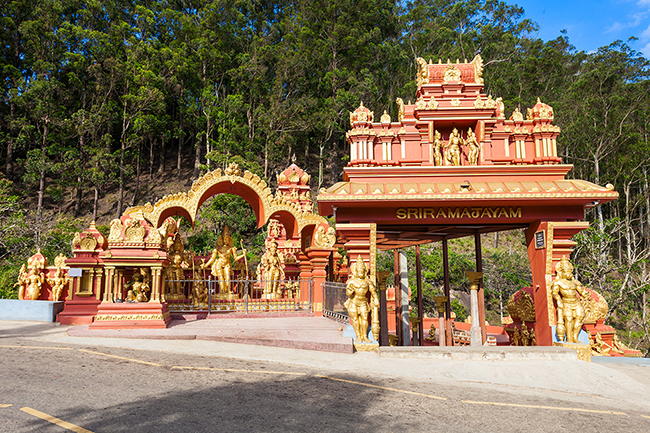
Located near the cool highland town of Nuwara Eliya, Seetha Amman Temple is one of the most recognized Ramayana-linked sites in Sri Lanka.
Set beside a flowing stream and surrounded by forested hills, this temple is closely connected with local legends associated with the Ramayana narrative. Visitors often combine this stop with nearby attractions such as Hakgala Botanical Gardens and tea estates.
From a travel point of view, the setting is what stands out most; misty weather, lush greenery, and a peaceful atmosphere that makes it one of the most photographed locations on the trail.
Ravana Falls & Ella Region
Ravana Falls, located near Ella, is one of Sri Lanka’s most scenic natural landmarks and is strongly associated with Ramayana traditions in local storytelling.
Today, it is best known for its dramatic waterfall cascade surrounded by rock formations and dense greenery. It serves as a refreshing stop along the hill country route and is often included in journeys between Nuwara Eliya, Ella, and the southern plains.
Nearby Ella adds to the experience with viewpoints, bridges, and mountain landscapes that make this region one of the most visually impressive parts of the trail.
Why These Sites Matter in a Travel Context
What makes these Ramayana-linked locations significant is not only their historical or cultural background, but how they are experienced today as part of Sri Lanka’s travel landscape.
Each site is placed within a distinct environment; coastal plains, hill country tea estates, or misty valleys, giving travellers a natural flow between culture and scenery. This combination allows the journey to feel immersive without being overly structured or restricted.
Instead of focusing solely on heritage, the experience becomes a blend of storytelling, landscape exploration, and cultural observation.
Conclusion
The Ramayana Trail in Sri Lanka is best understood as a cultural travel route where history, landscape, and experience come together. Sites like Munneswaram, Sri Bhakta Hanuman Temple, Seetha Amman Temple, and Ravana Falls form the core of this journey, each offering a unique connection between heritage and environment.
For travellers, it is not just about visiting landmarks, it is about moving through a living landscape where every stop adds depth to the journey across Sri Lanka.